Nutrition is one of the most overcomplicated parts of health.
Every year, a new diet trend takes over. One group says carbohydrates are the problem. Another says fat is the problem. Some people swear by fasting, others by tracking every gram, and others by cutting out entire food groups. The result is that many people feel confused before they even start.
But eating better does not have to be extreme.
For most people, better nutrition starts with a few consistent basics: eat enough protein, include fruits and vegetables, choose mostly whole or minimally processed foods, drink enough water, and match your food intake to your goals. That may sound simple, but simple does not mean ineffective. The basics work because they are repeatable.
A healthy diet is not about perfection. It is about creating a pattern of eating that supports your body over time.
Food Is More Than Calories
Calories matter, but food is more than calories.
Food gives your body energy, but it also provides amino acids, vitamins, minerals, fiber, electrolytes, fatty acids, and other compounds that help your body function. These nutrients affect muscle repair, hormone production, immune function, digestion, brain health, mood, energy, and recovery.
This is why two meals with the same calories can affect you differently.
A meal built around lean protein, potatoes, vegetables, fruit, and healthy fats may leave you full, energized, and stable for hours. A meal built mostly around highly processed snacks may contain similar calories, but it may not support fullness, blood sugar control, training performance, or long-term health in the same way.
That does not mean every meal has to be "clean." It means food quality matters, especially when repeated over time.
Keep It Simple
The best nutrition plan is not the most complicated one. It is the one you can actually follow.
Start with a simple plate structure:
- Protein with most meals.
- Fruits or vegetables daily.
- Carbohydrates that support your energy needs.
- Healthy fats in reasonable portions.
- Enough water to support digestion, performance, and recovery.
This structure works because it removes the need to constantly guess. You are not starting from scratch every time you eat. You have a repeatable system.
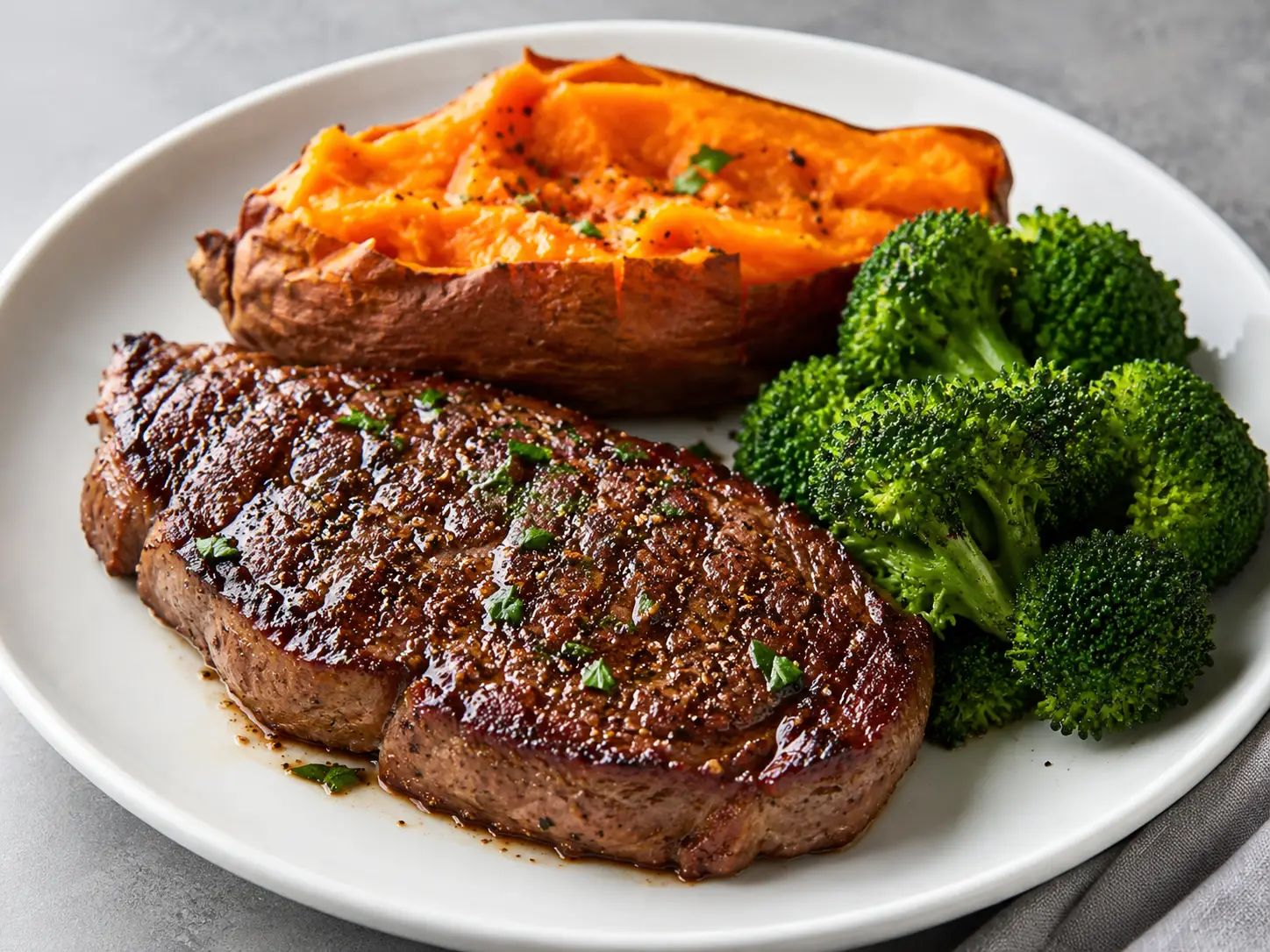
A balanced meal might look like chicken, rice, vegetables, and avocado. It might be eggs, oats, fruit, and Greek yogurt. It might be steak, potatoes, broccoli, and olive oil. It might be a burrito bowl with rice, beans, meat, salsa, and vegetables.
The exact foods can change. The structure stays the same.
Protein Supports Muscle, Recovery, and Fullness
Protein is one of the most important nutrients for anyone who trains.
When you lift weights or perform challenging exercise, you create stress in muscle tissue. Protein provides amino acids, which are the building blocks your body uses to repair and build muscle. Protein also helps preserve lean mass during fat loss and supports fullness, which can make it easier to manage overall calorie intake.
For people who train regularly, a strong general target is about 0.8 to 1.2 grams of protein per pound of body weight per day. For a 180-pound person, that would be roughly 145 to 215 grams of protein per day. People who are lifting consistently, trying to build muscle, dieting to lose fat while maintaining muscle, or training at higher volumes may benefit from being toward the higher end of that range.
You do not need to obsess over perfect timing, but spreading protein across the day is useful. Most people do well with a protein source at breakfast, lunch, dinner, and possibly a snack.
Good options include chicken, turkey, beef, eggs, fish, Greek yogurt, cottage cheese, tofu, tempeh, beans, lentils, protein powder, and other high-protein foods.
The goal is not to eat the same thing every day. The goal is to consistently give your body the materials it needs to recover and adapt.
Carbohydrates Are Fuel
Carbohydrates are often misunderstood.
They are not automatically "bad," and they are not something every person needs to avoid. Carbohydrates are the body’s preferred fuel source for many forms of higher-intensity activity. If you train hard, lift weights, run, play sports, or have an active lifestyle, carbs can help support performance and recovery.
Carbohydrates are stored in the body as glycogen, primarily in muscle and the liver. During training, your body uses glycogen to help fuel effort. If you consistently under-eat carbohydrates while training hard, you may notice lower energy, weaker workouts, slower recovery, irritability, and stronger cravings.
This does not mean you need unlimited carbs. It means carbs should match your activity level, goals, and preferences.
Good options include potatoes, rice, oats, fruit, beans, whole grains, pasta, and other minimally processed sources. More processed carbohydrates can still fit, but they should not make up the majority of your intake.
Fat Supports Hormones, Cells, and Satisfaction
Dietary fat is also important.
Fat helps support hormone production, brain health, cell structure, and the absorption of fat-soluble vitamins like A, D, E, and K. It also adds flavor and satisfaction to meals, which can make healthy eating easier to sustain.
The key is portion control and quality. Fats are calorie-dense, which means small amounts can add up quickly. That is not a reason to avoid them. It is a reason to be intentional.
Good sources include olive oil, avocado, nuts, seeds, eggs, fatty fish, and some dairy products. A balanced diet does not need to be extremely low-fat or extremely high-fat. It needs to fit your goals and support your health.
Fiber Helps Digestion, Fullness, and Metabolic Health
Fiber is one of the most underrated parts of nutrition.
It supports digestion, helps keep you fuller, contributes to more stable blood sugar, and plays a role in gut health. Fiber is mostly found in plant foods, including fruits, vegetables, beans, lentils, whole grains, nuts, and seeds.
A higher-fiber diet usually comes with more nutrient-dense foods overall. That makes it easier to eat in a way that supports health without micromanaging every detail.
If your current diet is low in fiber, increase it gradually. Going from very little fiber to a lot overnight can cause bloating or stomach discomfort. Add more fruits, vegetables, beans, and whole grains slowly, and drink enough water as you increase fiber intake.
Food Affects the Brain Too
Nutrition does not just affect body weight or gym performance. It also affects how you feel and function mentally.
Your brain needs a steady supply of energy and nutrients. Blood sugar swings, dehydration, under-eating, and low-quality food patterns can all affect mood, focus, and energy. On the other hand, balanced meals with protein, fiber, carbohydrates, and healthy fats can help you feel more stable throughout the day.
Food is not a cure-all, but it is one of the signals your body and brain receive every day. The more often that signal supports stability, recovery, and nourishment, the better you are likely to feel.
Fuel Around Your Training
You do not need a perfect pre-workout or post-workout routine. But eating around your training can help.
Before training, the goal is to have enough energy to perform. For most people, that means having a meal with protein and carbohydrates a few hours before training, or a smaller snack closer to the workout.
Examples:
- Greek yogurt and fruit.
- Chicken and rice.
- Eggs and toast.
- Oats with protein powder.
- A banana and a protein shake.
After training, the goal is to recover. Protein helps repair muscle. Carbohydrates help replenish glycogen. Fluids and electrolytes help restore hydration.
The best nutrition plan should be individualized based on your body, goals, schedule, training style, and preferences. The same principle applies whether you are an athlete or someone simply trying to train consistently and feel better.
Hydration Matters More Than People Think
Hydration affects energy, digestion, temperature regulation, focus, and performance.
Even mild dehydration can make workouts feel harder. It can also contribute to headaches, fatigue, poor concentration, and reduced physical output. If you sweat a lot, train in the heat, or do longer sessions, you may also need electrolytes, especially sodium.
A simple starting point is to drink water consistently throughout the day and pay attention to thirst, urine color, sweat rate, and training performance. You do not need to force excessive amounts of water, but you also do not want to live in a constant state of low-level dehydration.
For most people, hydration improves when they build it into their routine: water in the morning, water with meals, water before training, and water after training.
Do Not Let Diet Culture Steal the Basics
Diet culture often makes nutrition feel like a moral test.
People label foods as good or bad. They feel guilty for eating something enjoyable. They swing between restriction and overeating. They try to be perfect, then quit when they are not.
That mindset is usually less effective than building structure with flexibility.
A better approach is to think in terms of patterns. Most of your meals should support your goals. Some meals can simply be for enjoyment, convenience, or social life. You do not need to earn your food. You do not need to punish yourself after eating. You need a system that makes the better choice easier most of the time.
Consistency beats intensity here too.
A sustainable nutrition plan should leave room for birthdays, restaurants, travel, holidays, and normal life. If your plan only works when life is perfectly controlled, it is probably not a great plan.
Better Eating Is a Behavior System
Eating better is not only about knowing what to eat. It is about making the right actions easier.
Your environment matters. Your schedule matters. Your grocery list matters. Your cooking skills matter. Your stress level matters. Your sleep matters. Your habits matter.
If healthy eating feels hard, it may not be because you lack discipline. It may be because your system is working against you.
Make the basics easier:
- Keep protein options ready.
- Buy fruits and vegetables you actually like.
- Prep simple meals, not complicated recipes.
- Keep easy snacks available.
- Do not shop hungry if you tend to impulse buy.
- Plan for busy days before they happen.
- Have a few default meals you can repeat.
Behavior change becomes easier when the healthier choice is visible, available, and realistic.
The Goal Is Not Perfection
You do not need to eat perfectly to make progress.
You need enough consistency to create a pattern your body can respond to. One meal does not define your health. One weekend does not ruin your progress. One dessert does not erase your training.
What matters is what you do most of the time.
If you can improve breakfast, improve breakfast. If you can add protein to lunch, start there. If you can cook dinner three nights per week instead of one, that matters. If you can swap one sugary drink for water, that counts. If you can add one serving of vegetables per day, that is progress.
Small improvements repeated consistently can create major change.
A Simple Starting Framework
Here is a realistic way to begin:
- Eat protein at most meals.
- Include fruits or vegetables daily.
- Choose mostly whole or minimally processed foods.
- Use carbohydrates to support activity and training.
- Include healthy fats in reasonable portions.
- Drink water consistently.
- Limit ultra-processed foods without banning them completely.
- Build meals you actually enjoy.
- Repeat the basics long enough to feel the difference.
This is not flashy. That is the point.
Flashy plans often fail because they demand too much too soon. Simple plans work because they can become part of your life.
The Real Purpose of Nutrition
Eating better is not about being strict. It is about supporting the life you want to live.
Good nutrition helps you train harder, recover better, think more clearly, manage energy, support long-term health, and feel more in control of your day. It gives your body the resources it needs to adapt.
You do not have to follow a perfect diet. You do not have to eliminate every food you enjoy. You do not have to become obsessive to make progress.
Start with the basics. Repeat them often. Adjust as your goals change.
Eat better, feel better, live better.